Molting or Feather Plucking? What Your Bird's Feathers Are Telling You
Losing feathers can be a normal molt or a sign of a problem. Learn how to tell molting from feather-destructive behavior in pet birds.
Key takeaways
- Normal molting replaces feathers gradually and evenly.
- Bald patches, chewed feathers, or plucking are not normal molting.
- Feather-destructive behavior can have medical or behavioral causes and should be checked.
Northwest Animal Clinic & Hospital
Veterinary Care Team
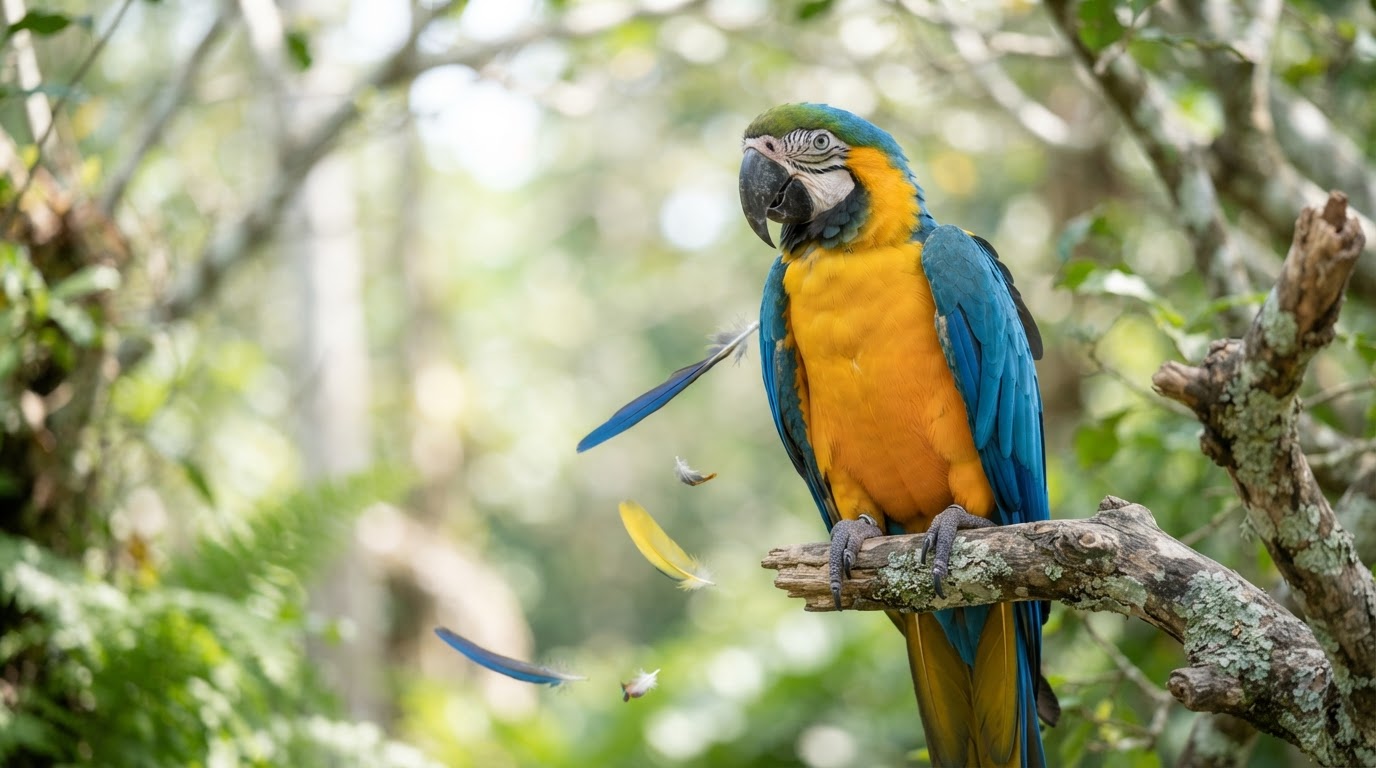
Finding feathers at the bottom of the cage is normal for pet birds, especially during seasonal molts. But feather loss can also signal a health or behavioral problem, and it helps to know the difference.
What Normal Molting Looks Like
During a molt, old feathers fall out and are replaced gradually and evenly. You may see pin feathers, new feathers still in their waxy sheath, and your bird may be a bit more irritable or sleepy. You should not see bald patches.
Signs of Feather-Destructive Behavior
Bald spots, broken or chewed feathers, feathers missing mostly from the chest, legs, or under the wings, or watching your bird pull at their own feathers are signs of feather-destructive behavior, not a normal molt.
Possible Causes
Causes can include skin or feather infections, parasites, nutritional problems, liver disease, allergies, as well as stress, boredom, or changes in routine. Because medical and behavioral causes can look alike, an exam is the right first step.
Expert Avian Care
Dr. Christine Fiorello (DACZM) and our exotics team can examine your bird, run diagnostics if needed, and help build a plan. Call 505-898-1491 to schedule an avian visit.
When to call us: If your pet shows signs of illness, call Northwest Animal Clinic at 505-898-1491.
Reviewed by the veterinary team at Northwest Animal Clinic & Hospital on September 29, 2026.
Have a question about your pet's health?
Our doctors see patients by appointment Monday through Friday. Call our pet care team to schedule a visit.