Bearded Dragon Care: Getting Heat and UVB Right
Most bearded dragon health problems start with the habitat. Learn the heat, lighting, and UVB basics that keep your dragon healthy.
Key takeaways
- Most reptile illness traces back to habitat setup.
- Bearded dragons need a heat gradient and quality UVB.
- Schedule a yearly exam with an exotics veterinarian.
Northwest Animal Clinic & Hospital
Veterinary Care Team
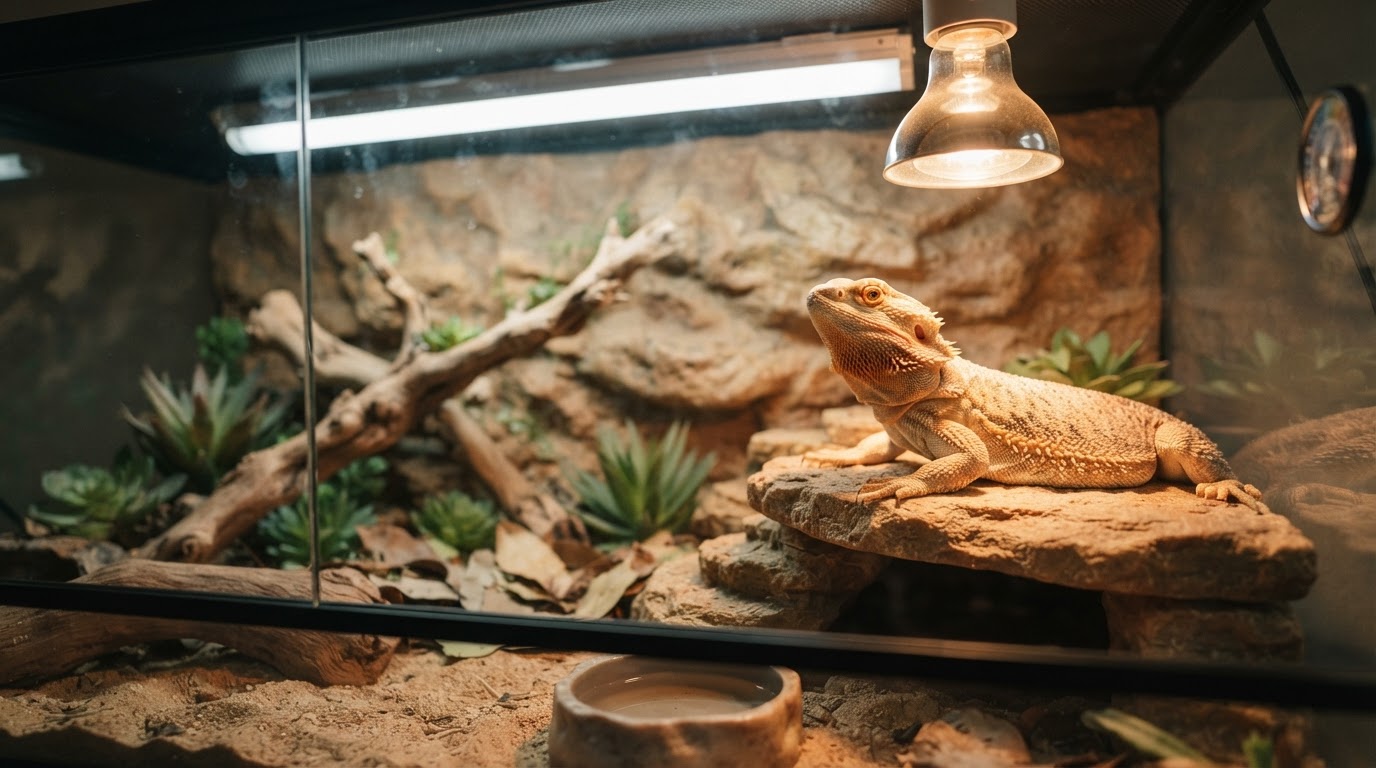
Bearded dragons are one of the most popular pet reptiles, and with good reason: they are curious, social, and relatively hardy. But many of the health problems we see in reptiles trace back to one thing: the habitat.
A Proper Heat Gradient
Reptiles rely on their environment to regulate body temperature. Your dragon needs a warm basking area on one end of the enclosure and a cooler side on the other, so they can move between them. Use reliable thermometers on both ends rather than guessing.
Why UVB Matters
UVB lighting allows reptiles to make vitamin D3 and absorb calcium. Without it, dragons can develop metabolic bone disease, which causes weak bones, tremors, and deformities. UVB bulbs lose strength over time even when they still look bright, so replace them on the schedule the manufacturer recommends.
Signs Something Is Off
Watch for lethargy, poor appetite, swollen limbs or jaw, twitching, or trouble climbing. These can be early signs of husbandry-related illness.
Your Partner in Reptile Care
Our exotics service, led by board-certified zoological medicine specialist Dr. Christine Fiorello, can review your setup and diet and perform a full wellness exam. Call 505-898-1491 to schedule your dragon's annual visit.
When to call us: If your pet shows signs of illness, call Northwest Animal Clinic at 505-898-1491.
Reviewed by the veterinary team at Northwest Animal Clinic & Hospital on September 2, 2026.
Have a question about your pet's health?
Our doctors see patients by appointment Monday through Friday. Call our pet care team to schedule a visit.